

UX Audit: Major League Pickleball’s YouTube Experience
A viewer-first analysis of production consistency, clarity, and trust
UX Strategy · Content Systems · Governance
Overview
Major League Pickleball has grown rapidly following its merger with the PPA Tour and expanded broadcast exposure. While viewership has surged, the YouTube experience shows repeated breakdowns in clarity, continuity, and trust.
This case study documents a viewer-first UX audit of MLP’s YouTube broadcasts, focused on how real people experience matches when watching on demand.
Scope and Method
Platform
YouTube (full-match, on-demand viewing)
Viewing Context
Fans watching matches after live play, often days later, seeking uninterrupted, spoiler-free experiences
Method
Direct observation of match uploads
Scenario-based UX analysis
Pattern identification across multiple tournaments
Viewer-first evaluation of reliability, clarity, and trust
Scenario: I want to watch one match at a time
Viewers expect to focus on a single match without distraction or confusion.
What’s happening
Split screens are used during active play
Secondary matches or promotions interrupt rallies
Visual focus is divided at critical moments
Why this is a problem
Split screens increase cognitive load and dilute the primary experience, particularly on laptops and mobile devices. What may feel efficient from a broadcast perspective feels chaotic to on-demand viewers who are not choosing to multitask.
What should change
Eliminate split screens during active points
Preserve single-match immersion for recorded matches
Treat on-demand viewing as a distinct experience from live broadcast
Scenario: I want to avoid spoilers
Many viewers watch matches after they occur and want the outcome preserved.
What’s happening
Announcers reference outcomes of other matches
Timestamps and metadata hint at results
Visual elements reveal parallel match scores
Why this is a problem
Spoilers remove suspense and emotional payoff, especially for fans intentionally watching on delay. Once the outcome is known, the incentive to continue watching drops sharply.
What should change
Prohibit cross-match spoilers in recorded content
Edit spoiler references out of on-demand uploads
Maintain narrative integrity for delayed viewers
Scenario: I want reliable audio, accurate scores, and a complete match
Baseline production reliability is essential for trust.
What’s happening
Audio is occasionally out of sync with video
Scoreboards disappear, lag, or display incorrect scores
Matches begin late, skip games, or cut off abruptly
Why this is a problem
These failures make matches confusing or unwatchable. More importantly, they signal a lack of quality control. When basic elements can’t be trusted, viewers disengage.
What should change
Implement a final playback check before publishing
Enforce scoreboard and audio standards
Verify match completeness prior to upload
Scenario: I want titles and descriptions I can trust
Metadata shapes expectations and discoverability.
What’s happening
Titles sometimes reveal match outcomes
Other titles rely on vague or click-driven language
Naming conventions vary widely across uploads
Why this is a problem
Inconsistent metadata breaks trust and confuses viewers. When fans can’t rely on titles to be accurate or spoiler-safe, they hesitate to click—or stop subscribing altogether.
What should change
Establish clear, spoiler-free titling standards
Apply consistent naming conventions
Treat metadata as part of the viewer experience, not marketing filler
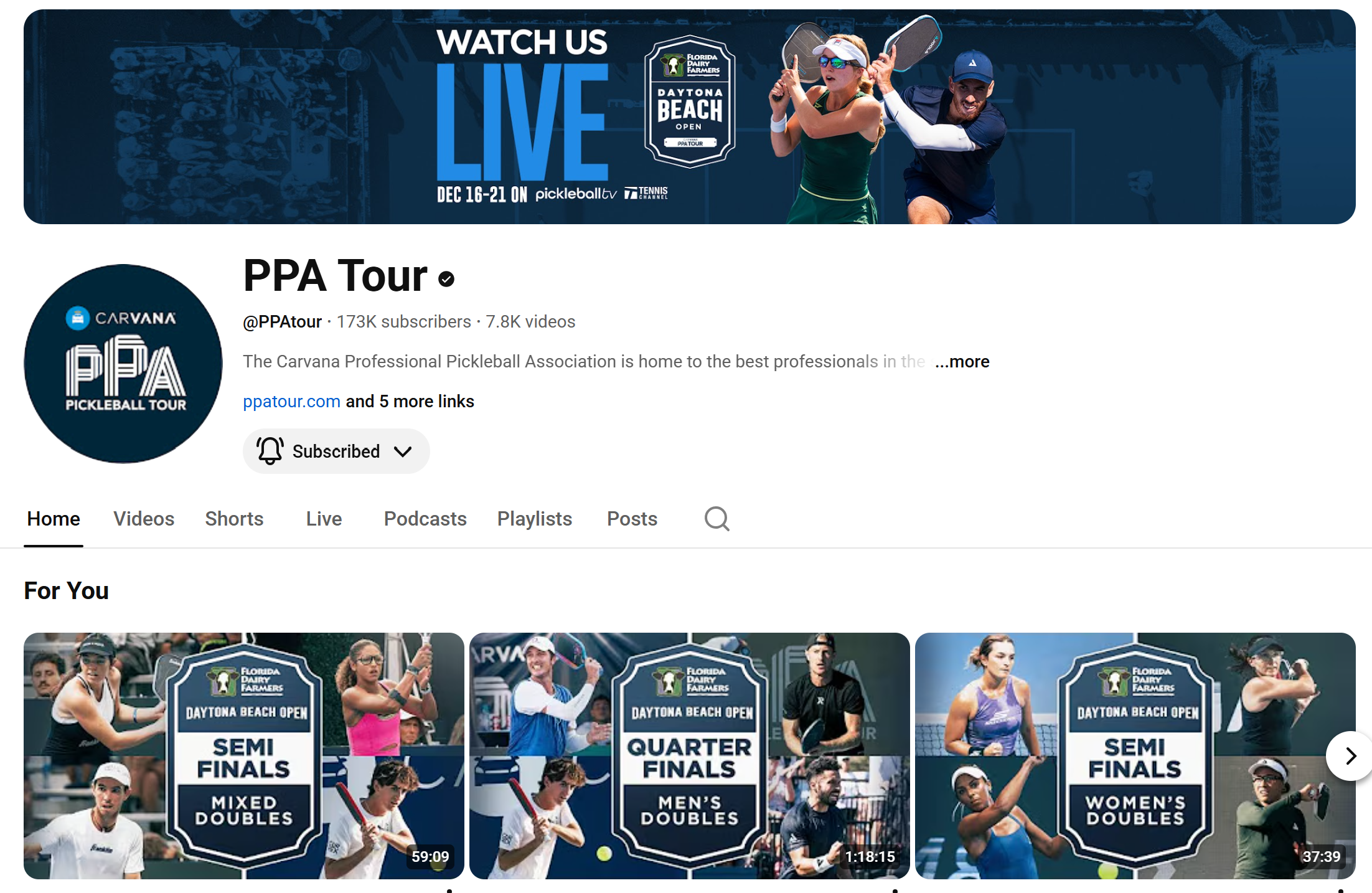
Additional Evidence: Cross-League Production Failures (PPA, MLP & APP)
Similar patterns appear across PPA and APP YouTube uploads, reinforcing that these issues are systemic rather than isolated.
Observed failures include
Entire matches uploaded with severely out-of-sync audio
Missing games or abrupt mid-match cuts
Score jumps that make match flow impossible to follow
Incorrect player names in titles or descriptions
Inconsistent titling practices, including outcome spoilers and incoherent click-driven language
Viewer comments repeatedly cite frustration, confusion, and disappointment, even often describing matches as “unwatchable.” These issues appear across leagues and tournaments, suggesting the absence of shared standards and ownership for the on-demand experience.
Business Impact: When Poor Experience Becomes Lost Revenue
YouTube is not merely a distribution channel for professional pickleball. It is also a monetized product surface. Full-match uploads generate advertising revenue, influence algorithmic reach, and serve as a primary entry point for new fans discovering the sport.
When uploads suffer from basic quality failures, such as audio out of sync, missing gameplay, incorrect metadata, or spoiler-heavy titles, viewers abandon videos early or avoid the channel altogether. This reduces watch time, suppresses algorithmic distribution, and limits both immediate ad revenue and long-term audience growth.
More critically, repeated negative experiences train viewers to expect inconsistency. As trust erodes, even high-interest matches underperform, turning valuable content into low-performing assets.
These outcomes are not driven by technology limitations or budget constraints. They stem from the absence of clear ownership, standards, and quality gates for the on-demand viewing experience. Improving baseline production reliability is not a cosmetic upgrade: It is a revenue-protecting, audience-growing investment.
Key Insight
Across all observed issues, the same pattern emerges: no one owns the viewer experience end to end.
These are not isolated mistakes. They are symptoms of missing standards, accountability, and governance for a critical fan-facing product.
What I Bring as a UX Strategist
I focus on how real people experience complex systems, especially when no one is clearly accountable for the outcome. My work centers on identifying where breakdowns occur across tools, teams, and handoffs—and translating those observations into clear standards that improve reliability, trust, and long-term value.
Conclusion: Fans Experience the System You Build
Professional pickleball is growing because people care enough to watch full matches, not just highlights. When production and editorial systems fail, fans are the ones absorbing the friction.
Across the issues documented here, the pattern is consistent: The on-demand viewer experience lacks clear ownership. When no one is accountable for how a match feels after it’s uploaded, small failures compound into confusion, frustration, lost trust and lost revenue. The comment sections make that visible.
This is not a problem of effort or intent. It is a problem of standards and accountability. YouTube is being treated as a place to publish content, rather than as a product that shapes how fans experience the sport.
The path forward is straightforward: Establish baseline standards, assign ownership, and respect the on-demand experience as its own product surface. Doing so protects revenue, strengthens credibility, and signals care for the audience that sustains the sport.
These are solvable problems. The gap is not capability: It is ownership.